
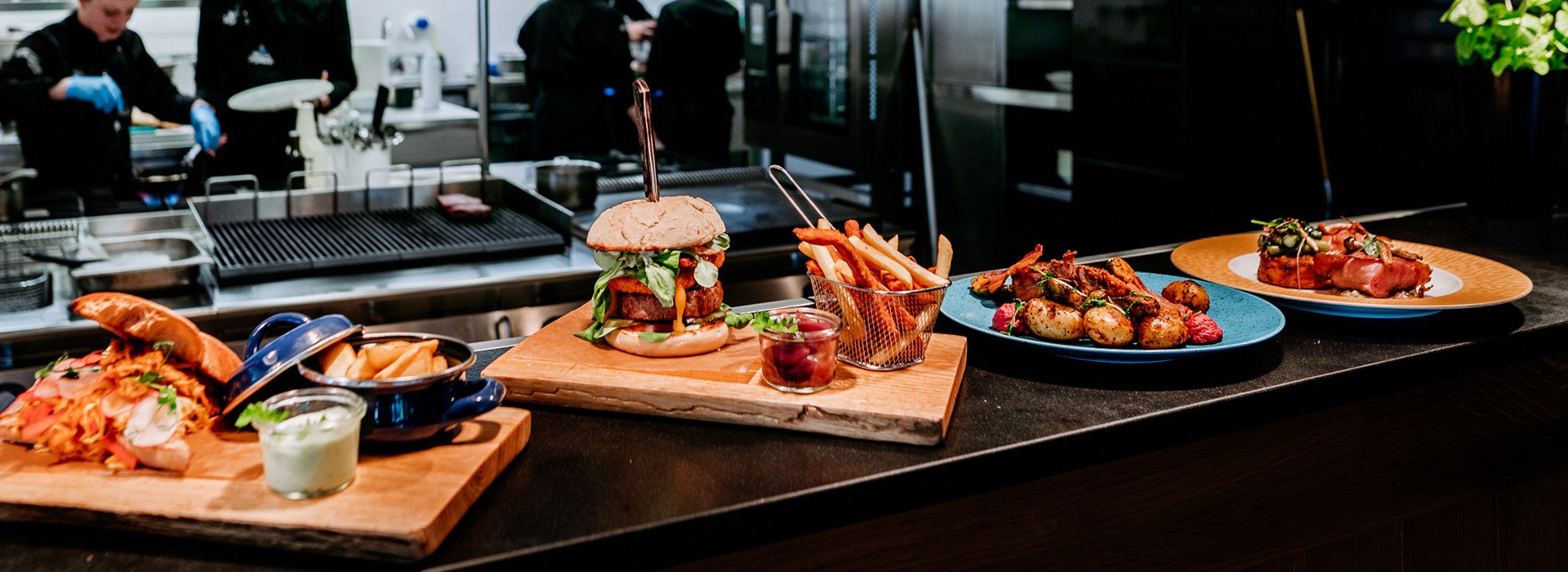
Interwar cuisine, reimagined
Pre-war Polish cooking as a starting point, not a reconstruction.
Restaurant: 502 176 259
Restaurant
The phrase 'interwar cuisine' usually raises two questions: what exactly it means, and why those two decades in particular. Below we explain where the inspiration comes from, what we change in the old recipes and where the produce we cook with comes from.
Why the interwar years
Polish cooking between 1918 and 1939 drew on many traditions. Manor-house and peasant customs met Galician cooking with its Viennese influences, Jewish and Eastern Borderlands cuisine, while the cities developed a culture of cafés and restaurants. Cookery books of the period - the best known is Maria Disslowa's 'Jak gotować' ('How to Cook') - describe a cuisine that was inventive yet thrifty. People cooked with what grew nearby and what could be stored: groats, pickles, beetroot, mushrooms, river fish and game.
Rytro was a summer resort at the time, where families came for the whole season. The Rytro Retro club, an underground lounge in 1930s style, draws on that atmosphere, and the restaurant's kitchen carries the same idea to the table.
What 'reimagined' means
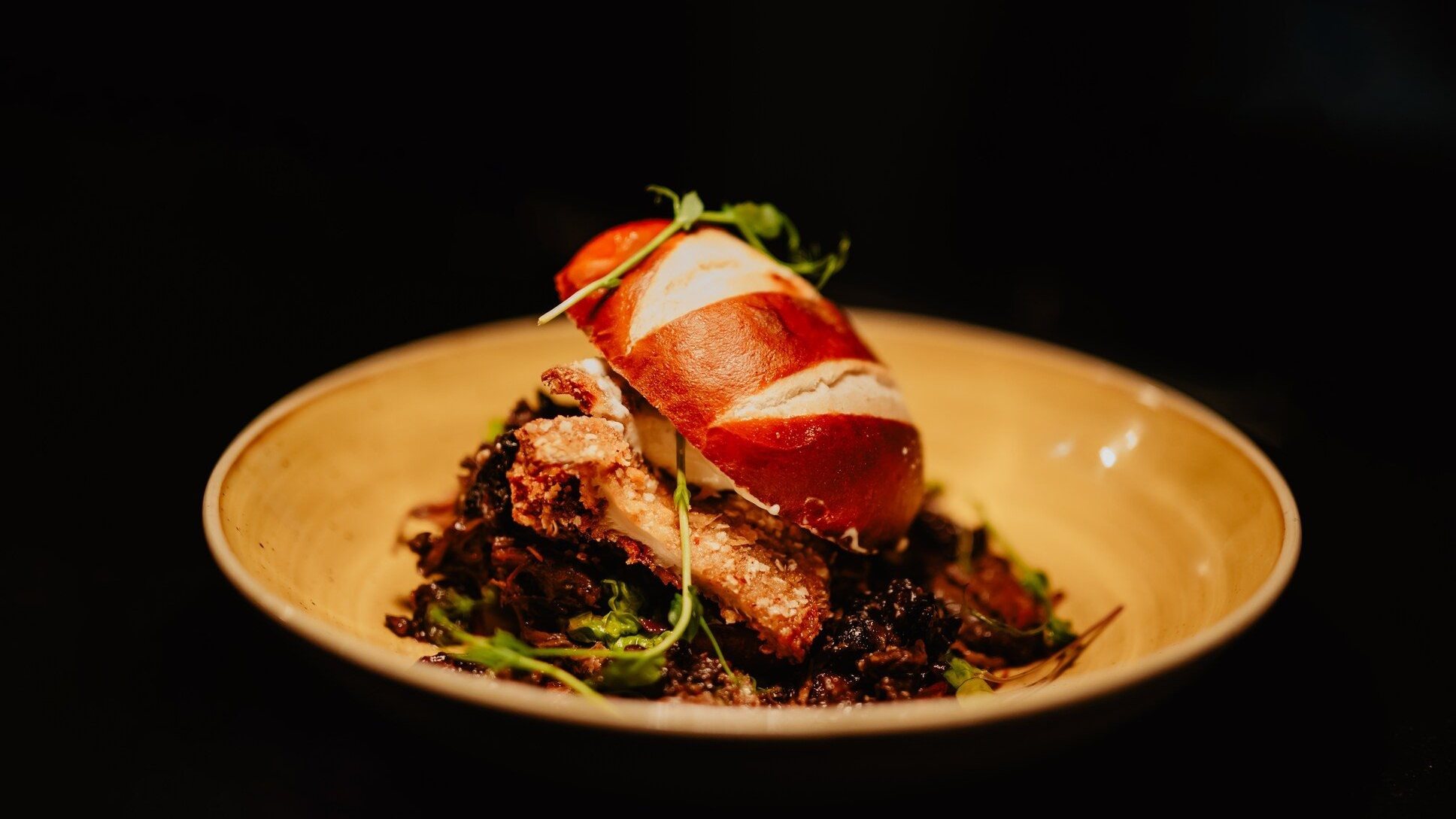
Artur Pasoń, Head Chef at Willa Poprad, does not recreate old recipes one to one. He takes a combination of flavours, an ingredient or a way of serving and prepares the dish as one cooks today.
Sous-vide cooks meat evenly and keeps it juicy. Fermentation produces pickles and condiments with more depth than their shop-bought equivalents. Pre-war portions were heavy, so we keep the flavour and reduce the fat and flour. Technique serves the ingredient; it is never an end in itself.
The restaurant has been listed in Poland 100 Best Restaurants in 2018 and 2024 and in the Gault&Millau Yellow Guide 2019.
Produce from the Beskid Sądecki
We write the menu from the ingredient up: first we see what nearby farms and suppliers have to offer, then we decide what to cook. Vegetables, dairy, meat and eggs come from farms in the area; cheeses, honey, fruit from the Sącz orchards and herbs come from the region too.
Lachy proziaki come from the local tradition - simple flatbreads of the Sącz Lachy people, once baked on the hotplate of a kitchen stove. They have their own section on our menu.
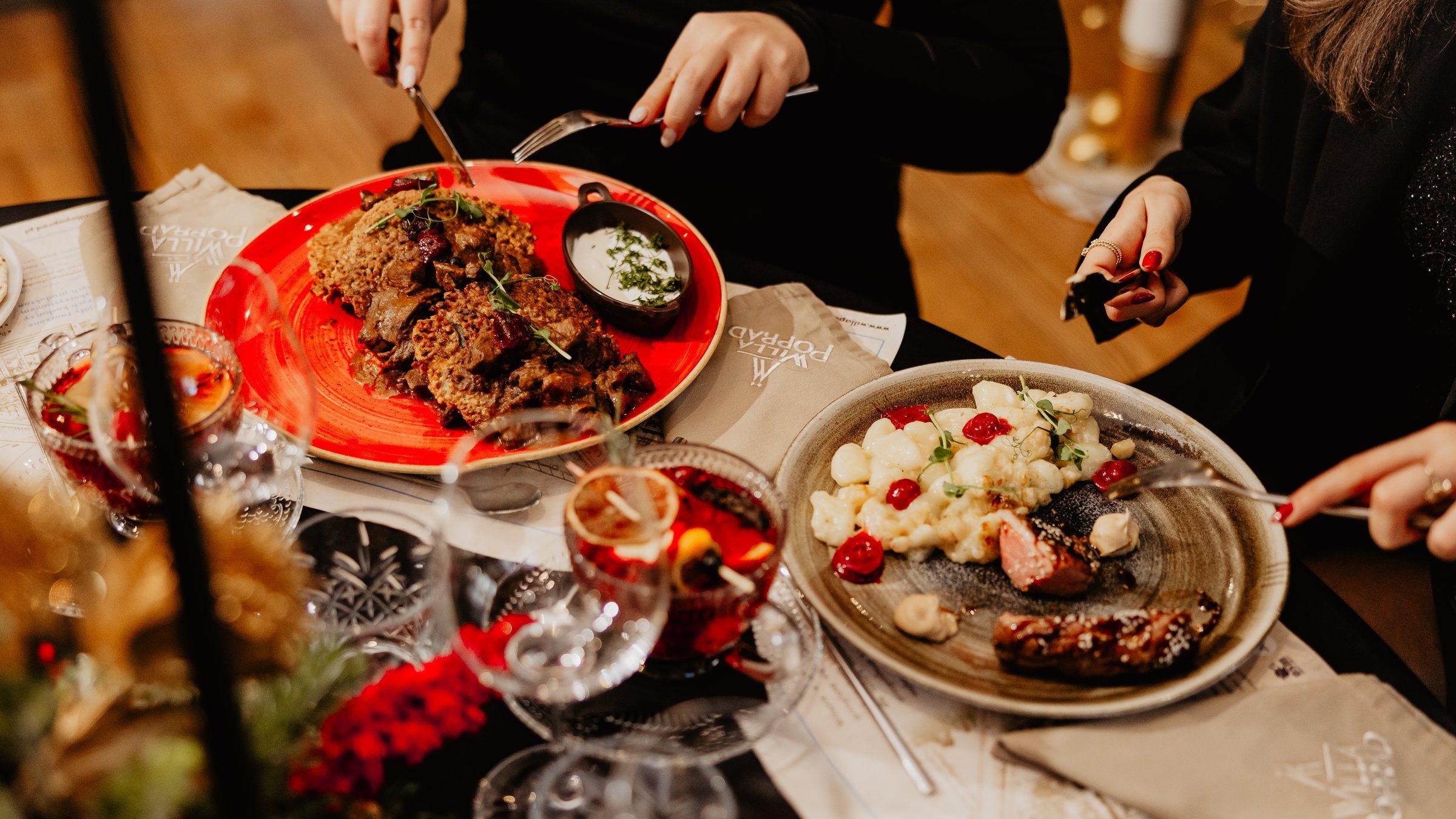
With the food we recommend wines from Polish vineyards. They sit well with this cooking, and your waiter will help you choose a bottle or a glass.
The Sezonówka
Alongside the regular menu we run the Sezonówka - a handful of dishes that change with the seasons. In spring it is built on young vegetables and herbs, in summer on fruit and garden produce, in autumn on mushrooms, pumpkins and game, in winter on pickles, groats and braises. Pre-war cooking was seasonal out of necessity; ours is seasonal by choice.
The current Sezonówka is published on the menu page and on our social media.
Where to try it
Every day in the restaurant, and from May to the end of October on the terrace above the Poprad as well. The same kitchen prepares our wedding menus, so couples who want to taste the food before the wedding are invited to lunch in the restaurant rather than a separate tasting. More on weddings: weddings.
Frequently asked questions
The essentials at a glance. If anything is missing, call or write to us.
What is interwar cuisine?
Polish cooking from 1918–1939, combining manor-house, peasant, Galician and urban traditions. We treat it as inspiration and serve it in a contemporary way - lighter, and with modern techniques.
Where does the produce come from?
From nearby farms and local suppliers in the Beskid Sądecki. We also recommend wines from Polish vineyards.
What is the Sezonówka?
A short menu of a few dishes that changes with the seasons. The current version is published on the menu page.
What are Lachy proziaki?
Traditional flatbreads of the Sącz Lachy people, once baked on the hotplate of a kitchen stove. They have their own section on the menu.
Are there vegetarian and gluten-free dishes?
Yes, they are marked on the menu. For allergies, simply tell your waiter.
Taste interwar cuisine
The restaurant is open daily 9:00–22:00. Tables: +48 502 176 259 - for weekends, ideally about a week ahead.